
Updates / News /
St. Louis’ Blues History- The Old Rock House
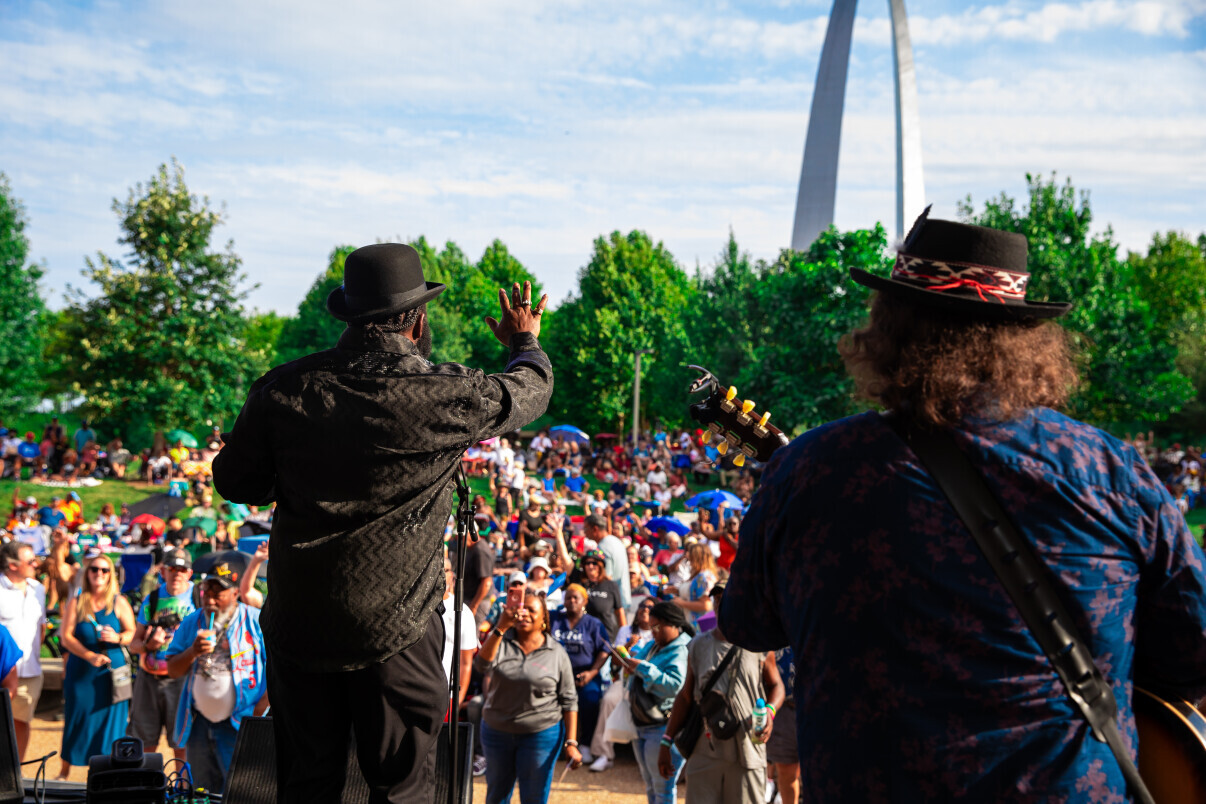
For more than a decade, Gateway Arch National Park has been home to the annual Blues at the Arch Festival, bringing the community together for a weekend of free performances in Gateway Arch National Park. Long before the Gateway Arch stood tall over our city, the Old Rock House was nestled on the banks of the Mississippi Riverfront, not far from where we host this music festival today.
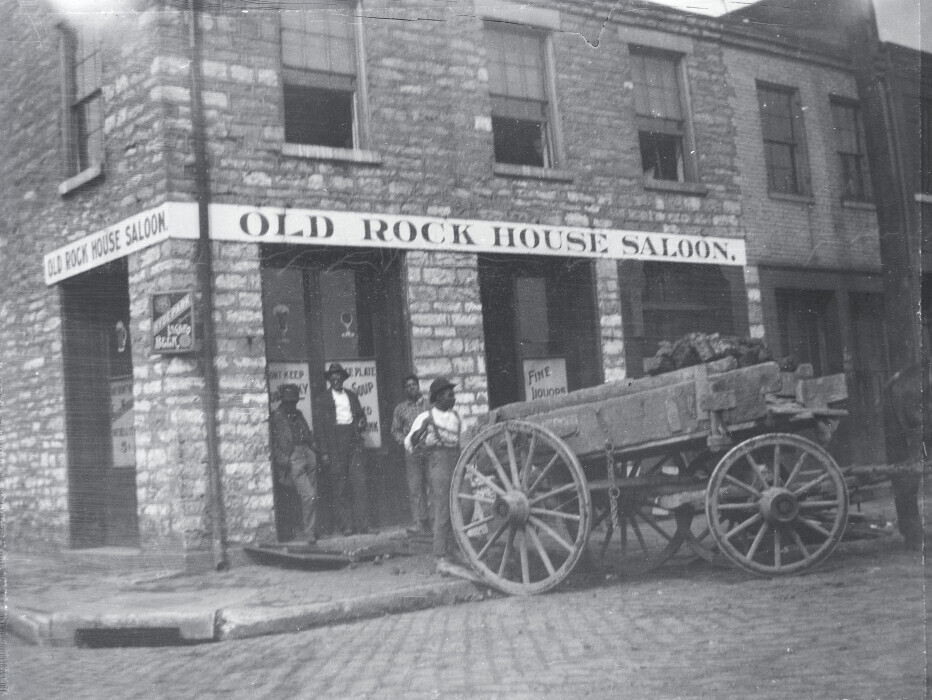
Originally constructed as a warehouse for fur traders, the Old Rock House eventually became one of the most prolific blues music venues of its time.
Learn more about the Old Rock House
(Video Transcript) This reconstructed building façade is composed of elements from the original Old Rock House, which stood for 141 years on the St. Louis Riverfront, not far from where the Visitor Center is located today. Constructed in 1818, the building originally served as a fur trade warehouse, a sail-maker’s shop, and various establishments, taverns, and bars until it became The Rock House Saloon.
In the early 1900s, St. Louis was a melting pot of musical innovation. The Great Migration brought many people from the South, infusing the city with the growing blues genre. The Riverfront, part of which today makes up the Gateway Arch grounds, played a pivotal role in the rise of the genre’s popularity. The Rock House served as a nightclub featuring blues performers in the 1930s, inherently becoming a home for the genre’s roots in St. Louis.
A regular vocalist was Ann Richardson, who billed herself as “Rock House Annie,” and drew crowds of suburbanites who came to hear Black music played by Black musicians. Famed “Father of the Blues” W.C. Handy performed at the Rock House in 1935, 21 years after writing and publishing his song, “The St. Louis Blues.” This song, was an instant hit, catapulting Handy and the genre to further fame. Henry Townsend, blues singer, guitarist and pianist, is also said to have performed at the venue while helping to develop the distinct Delta blues sound associated with St. Louis in the 1920s and 30s.
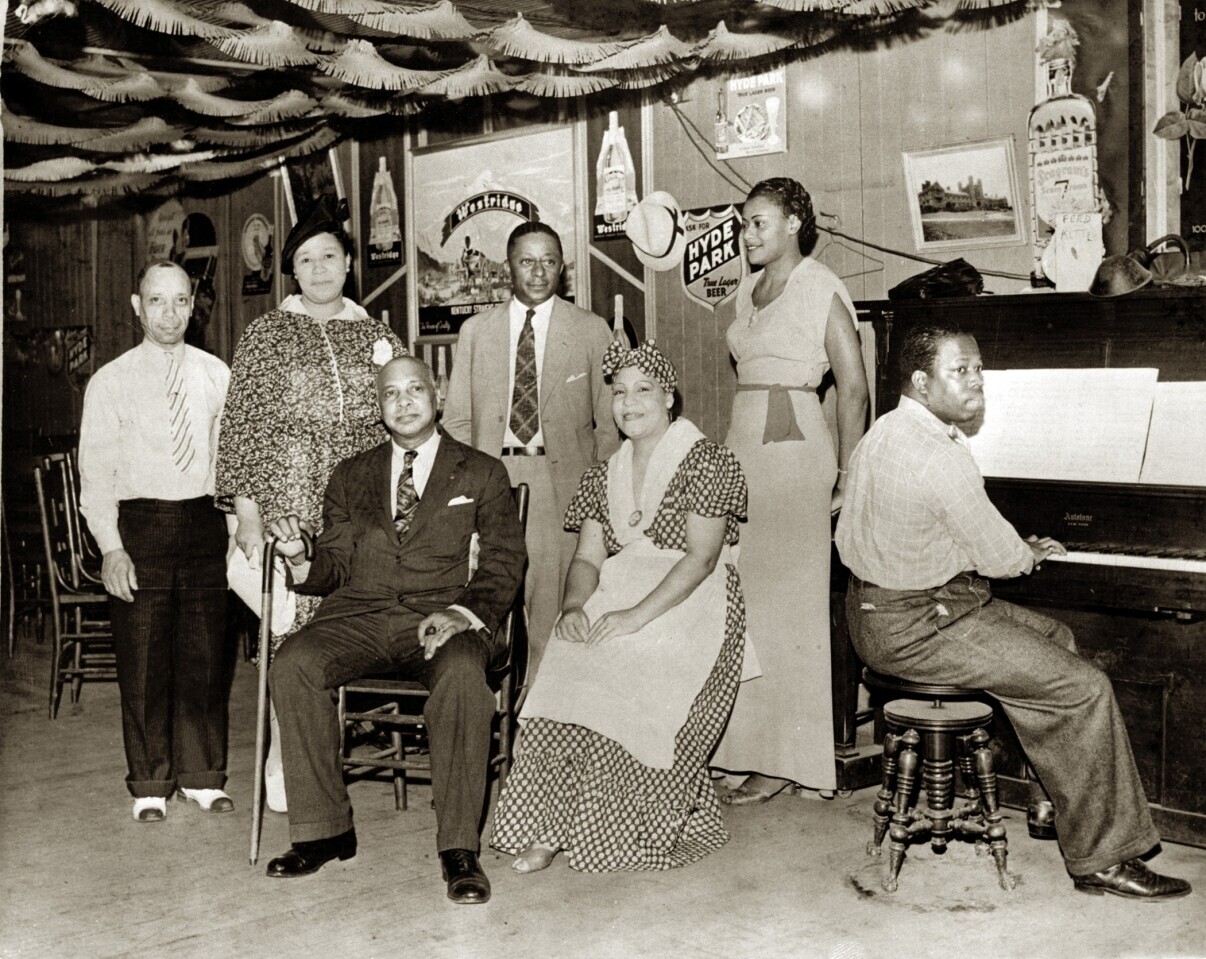
Above photo: W.C. Handy visiting Old Rock House Saloon. Courtesy of the Missouri Historical Society, St. Louis.
(Video Transcript) After the demolition of 37 blocks of the St. Louis riverfront between 1939 and 1942, the Old Rock House was restored to its historic 1818 appearance by the National Park Service, with demonstrations and tours being given in the building. During the development of the Gateway Arch project in the 1950s, construction of a railroad tunnel forced the dismantling of the building, parts of which were kept in storage. Later, they were reconstructed and exhibited here, in the Arch museum, where The Old Rock House’s storied history is learned by thousands of people every day.
When you come to Blues at the Arch in August, not only will you be listening to the sounds of today’s blues artists, but you’ll also hear the echoes of past blues musicians, steps away from where they performed and forever shaped the genre. Blues still plays loud and clear across St. Louis, and the city’s blues legacy, once stewarded by the Old Rock House, is now carried on by Blues at the Arch and the community that gathers in celebration each year.